Step one · about a minute
Check in.
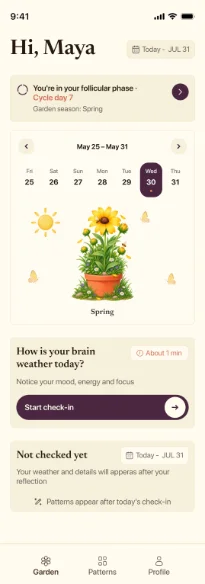
How is your brain weather today? Notice your mood, energy and focus. Tap, and you are done.
“How is your brain weather today?”
studies on how the cycle affects ADHD were published in 2025 or later. None before 2021. The science is only now catching up with what women have been saying.
before a period, and the first days of it.
For some women, studies found this is when symptom control varies most.
ADHD has mostly been studied and described without considering the menstrual cycle. Yet many women describe attention, mood and focus shifting across the month, and some find their usual medication seems to work less well in the days before their period.
Literature review of 16 publications · April 2026
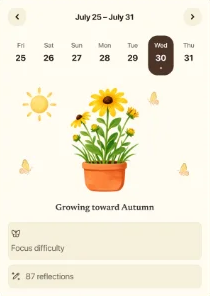
OnVeil is a one-minute daily reflection that puts your focus, mood, sleep and medication next to your cycle. Scroll through a month to see how OnVeil can support you.
Begin on day 1You open OnVeil and answer a few questions: how is your brain weather today? Stormy. You tap it, notice your energy, and you are done. About a minute.
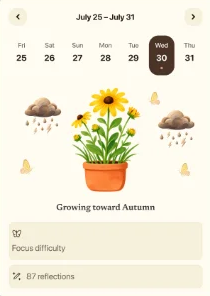
Every reflection feeds your plant. Wildflower, Camellia, Orchid, Bonsai: watch your seed grow. The weather over it is yours; the season follows your cycle. A new seed with each cycle.
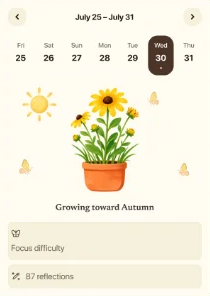
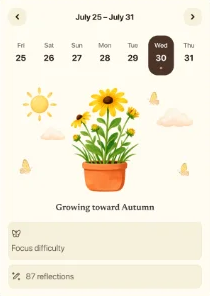
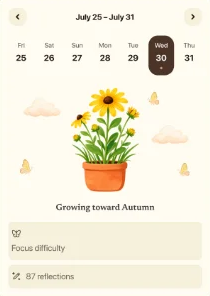
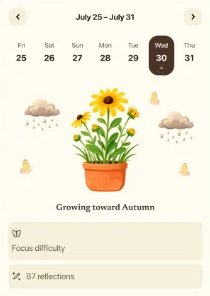
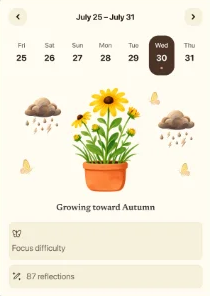
In this example, Summer is when medication most often felt like it worked, and when focus difficulty was logged least. OnVeil does not tell you this in advance. It shows you, after enough complete cycles, what you logged.
Focus slips. Procrastination climbs. It is not you failing; it is a pattern. OnVeil turns insights into a one-page summary you can put in front of your clinician.
| Winter | Spring | Summer | Autumn | |
|---|---|---|---|---|
| Focus | 17% | 15% | 11% | 38% |
| Procrastination | 19% | 12% | 9% | 31% |
| Anxiety | 13% | 9% | 11% | 29% |
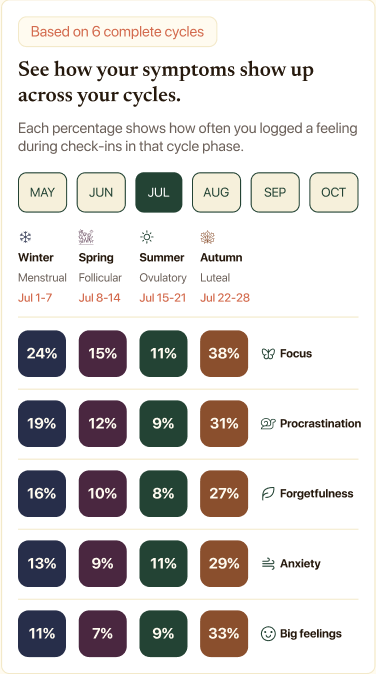
How is your brain weather today? Notice your mood, energy and focus. Tap, and you are done.
Your plant grows with every reflection. The weather over it is yours; the season follows your cycle.
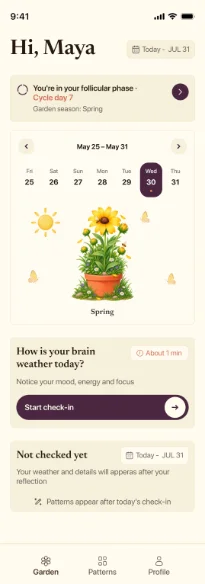
How often focus, procrastination or anxiety show up in each phase. Rule-based, no predictions.
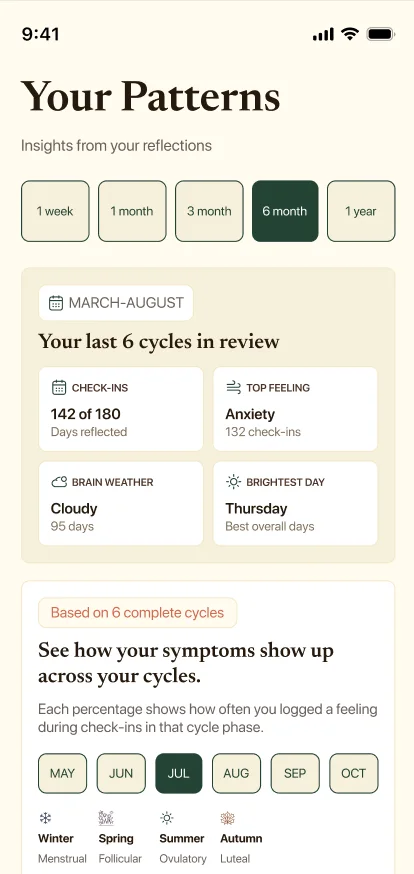
A one-page summary of how your symptoms and medication change across the cycle. Evidence for a conversation, not a diagnosis.
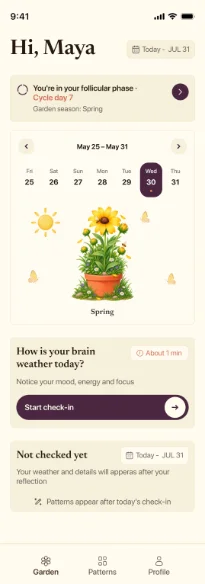
“Help me understand why my medication sometimes stops working, and help me talk to my clinician about it without being dismissed.”
Woman with ADHD, research interview, 2026
The waitlist opens soon.